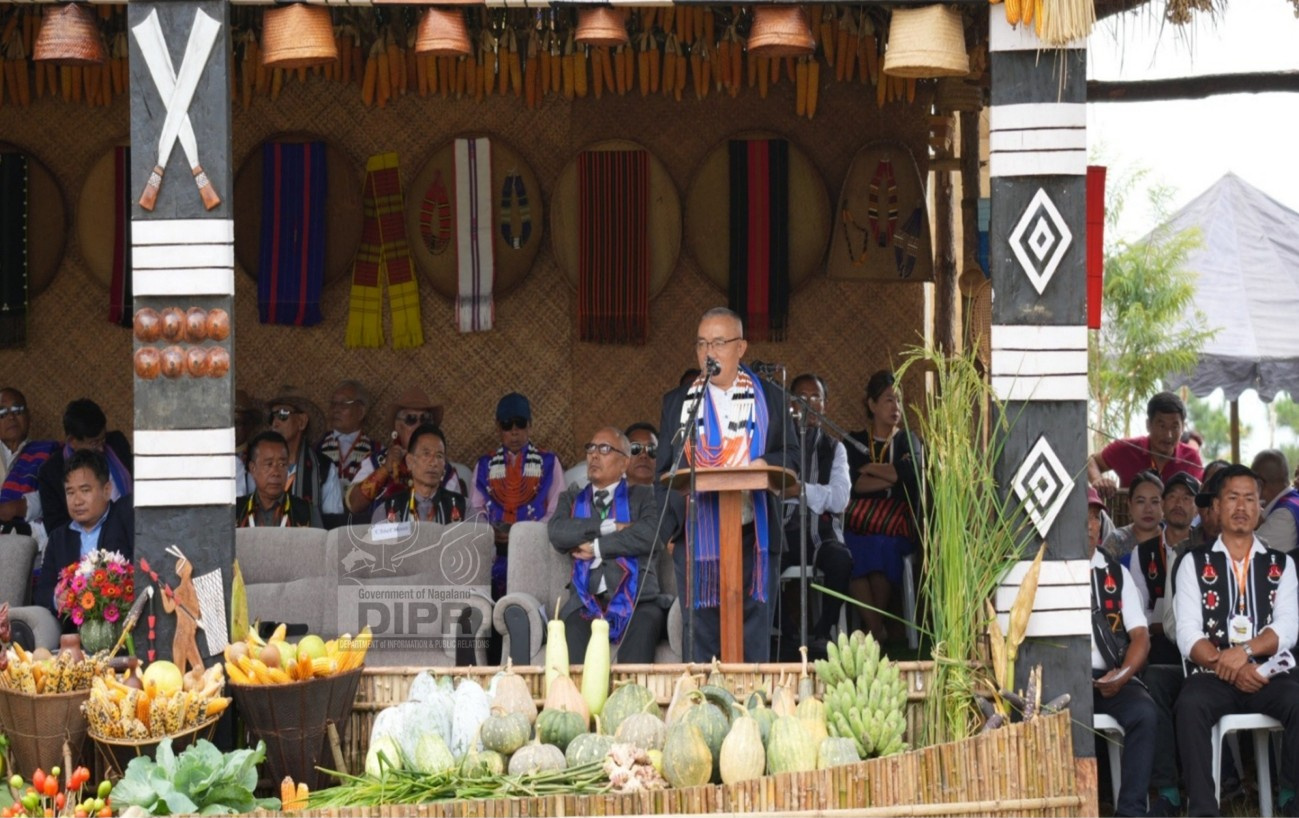
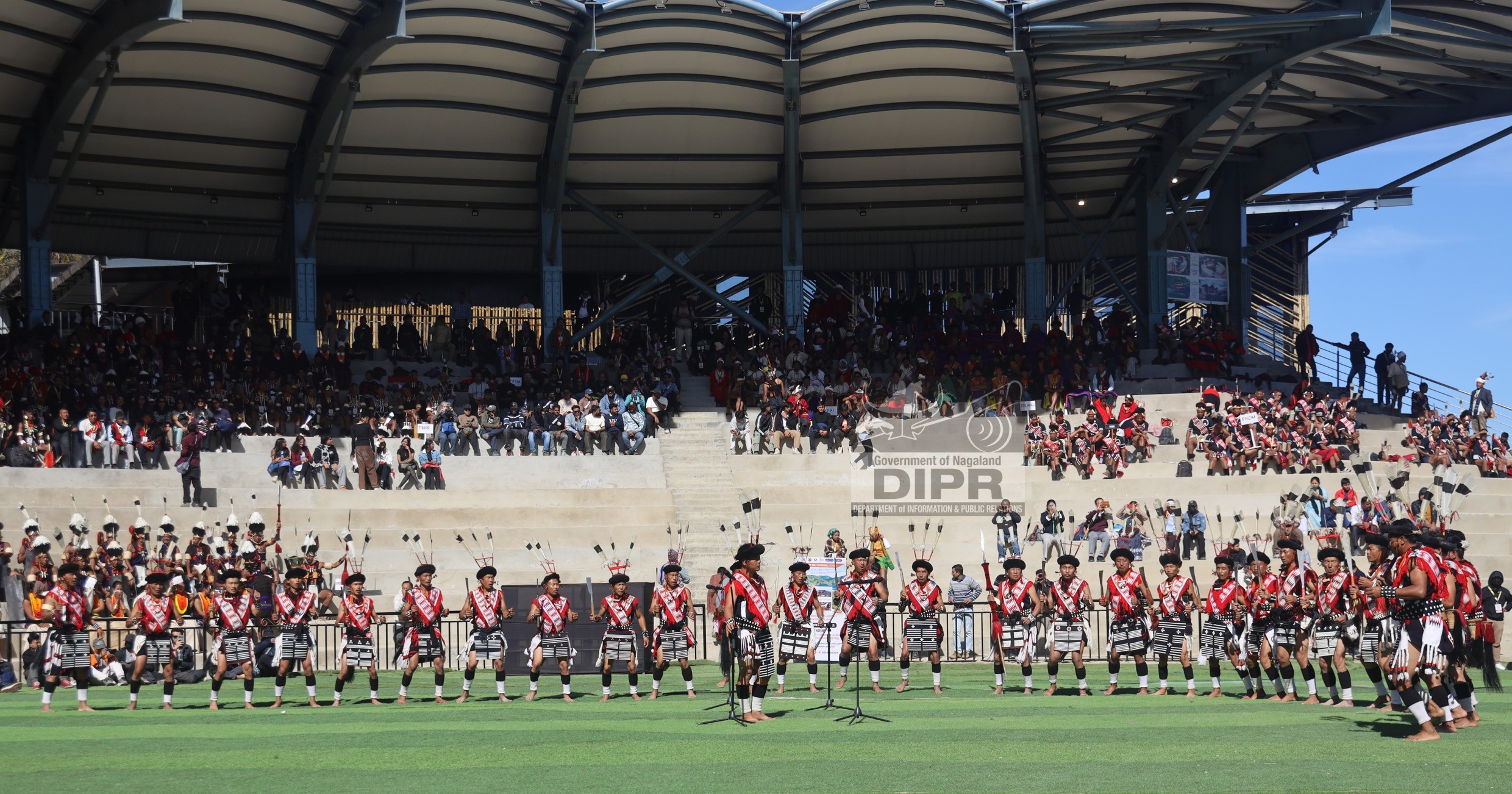
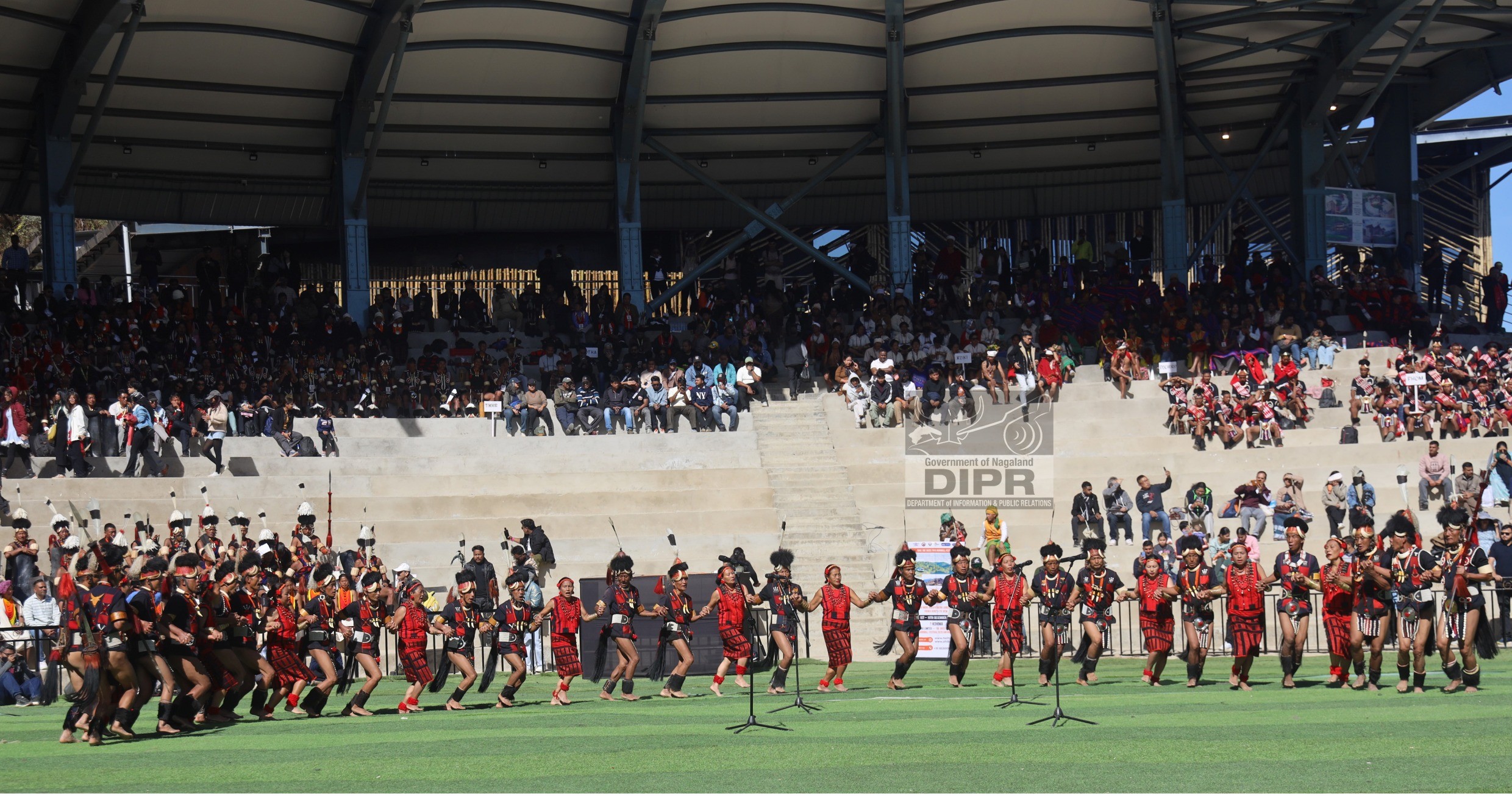
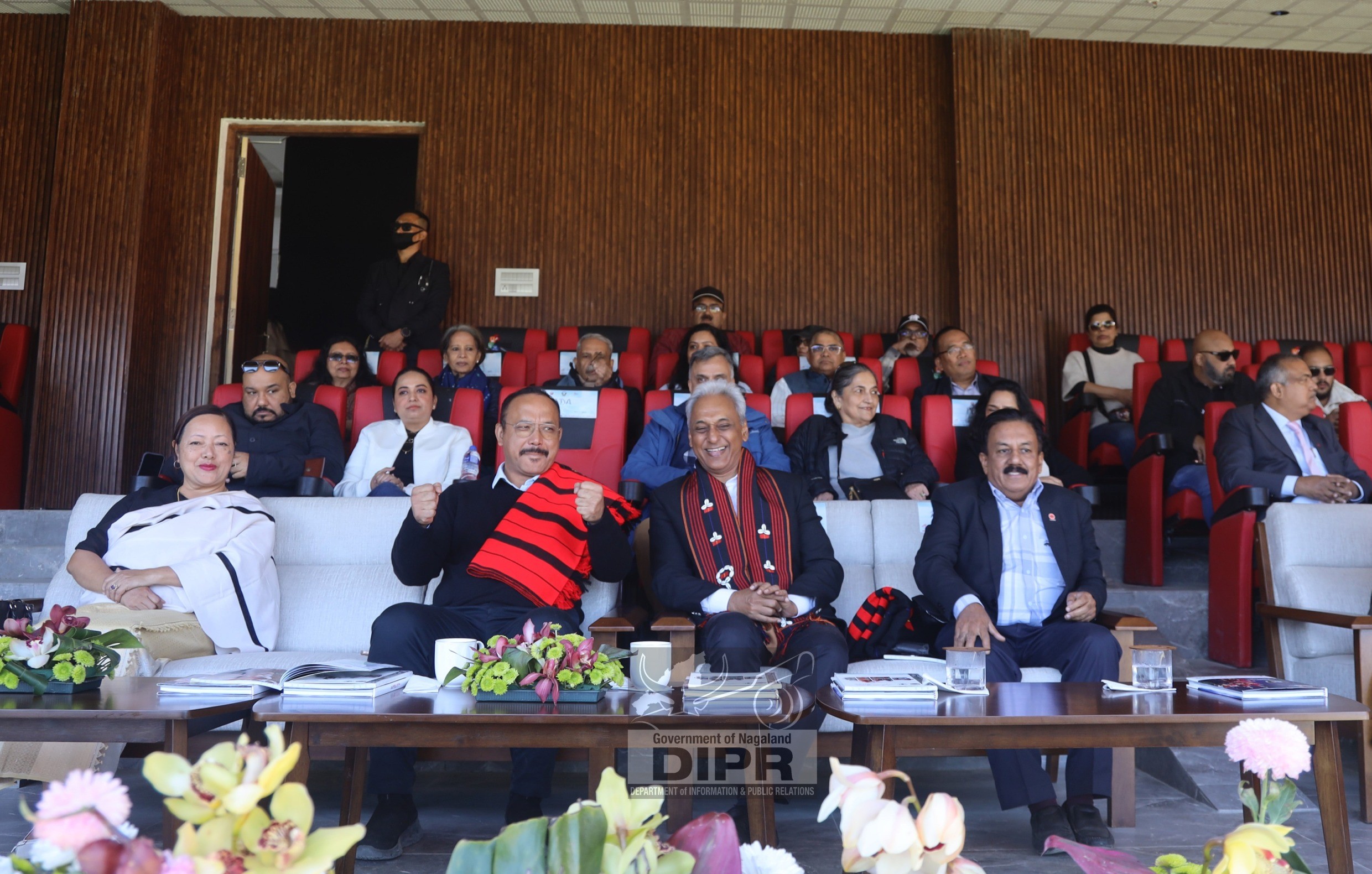
Marking the culmination of the 26th Edition of the Hornbill Festival 2025, a vibrant Cultural Show was held at the Unity Plaza, Naga Heritage Village, Kisama, Kohima on 10th December 2025. The programme was hosted by the Minister for Women Resource Development & Horticulture, Salhoutuonuo Kruse, and co-hosted by the Advisor for Industries & Commerce, Hekani Jakhalu.
Special guests included the Managing Director, Centre Point Group Enterprise, Larsing L. D. Sawyan; Chairman, PFRDA, S. Ramann; Executive Director & State Head, Indian Oil AOD State Office, Guwahati; and other dignitaries.
The Cultural Show featured performances from various Naga tribes, each presenting their rich traditional heritage through song, dance, and indigenous games.
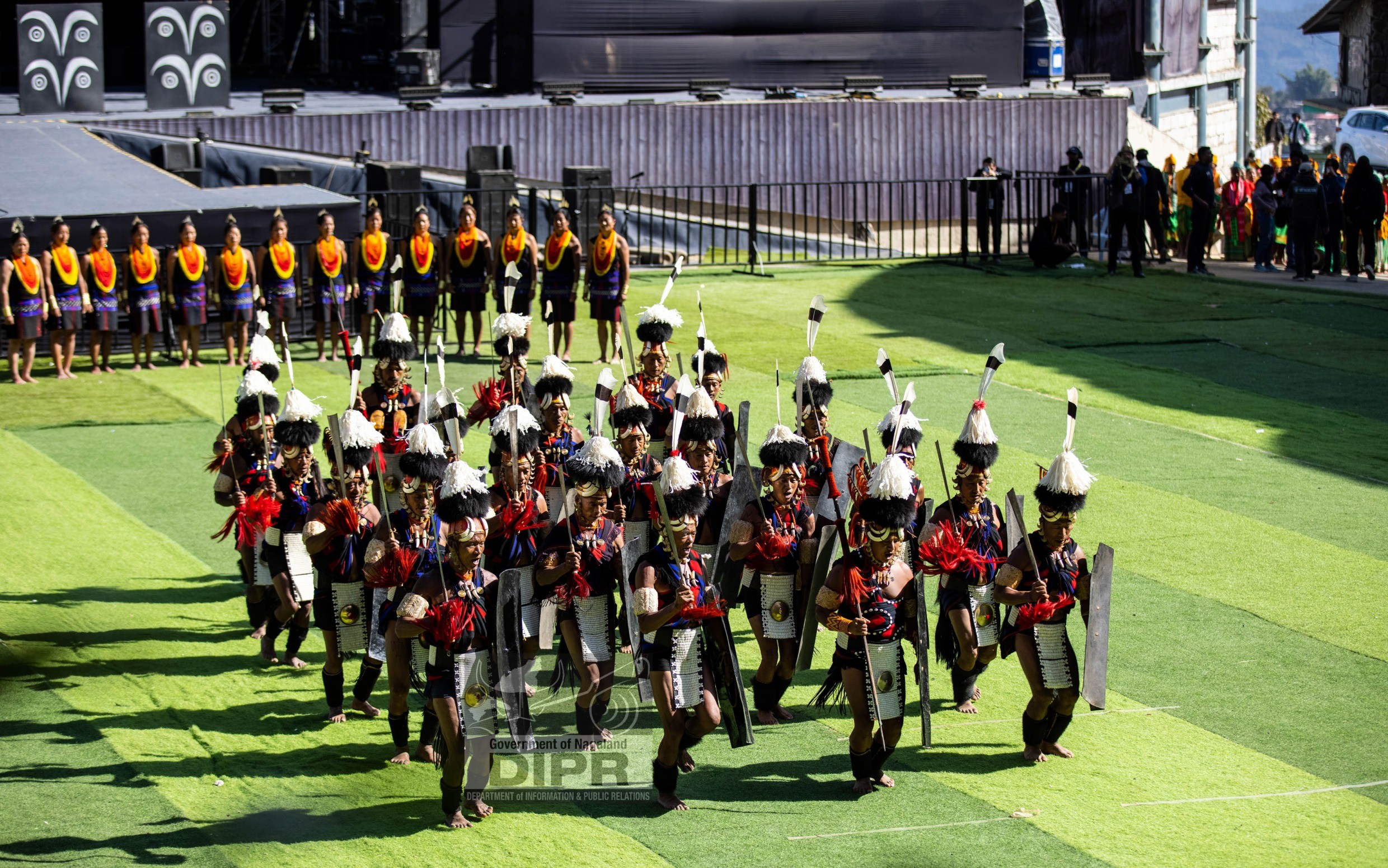
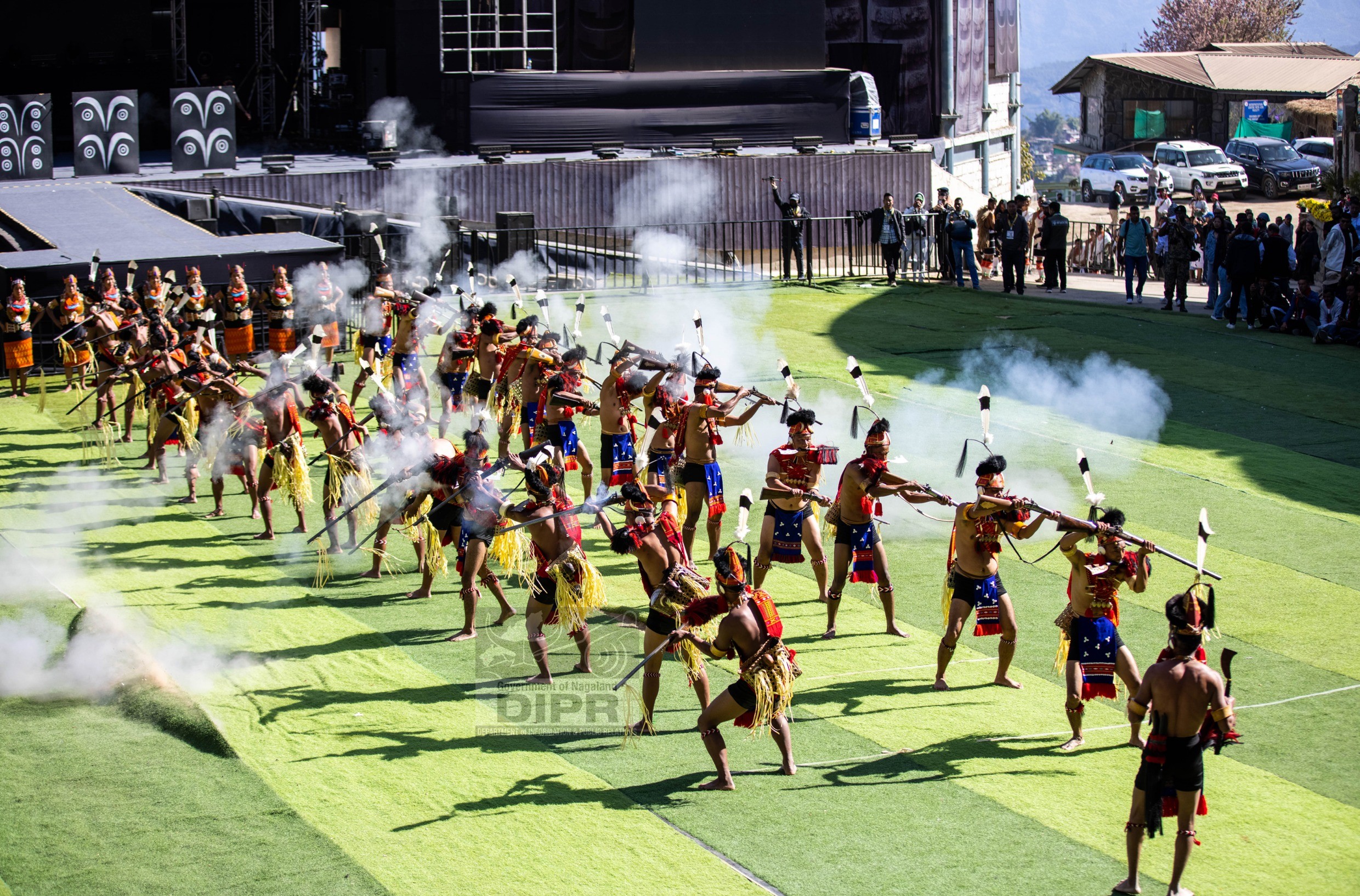
The Rengma cultural troupe presented Künyhun, a War Dance depicting the induction of newly selected warriors who undergo training in warfare under the guidance of elder warriors, symbolising pride, discipline, and the continuation of ancestral legacy. The Sangtam troupe showcased Athrongrü Nyichi (Warrior Dance) a celebratory dance performed after victorious battles during the era of headhunting, honouring the courage and strength of ancient warriors.
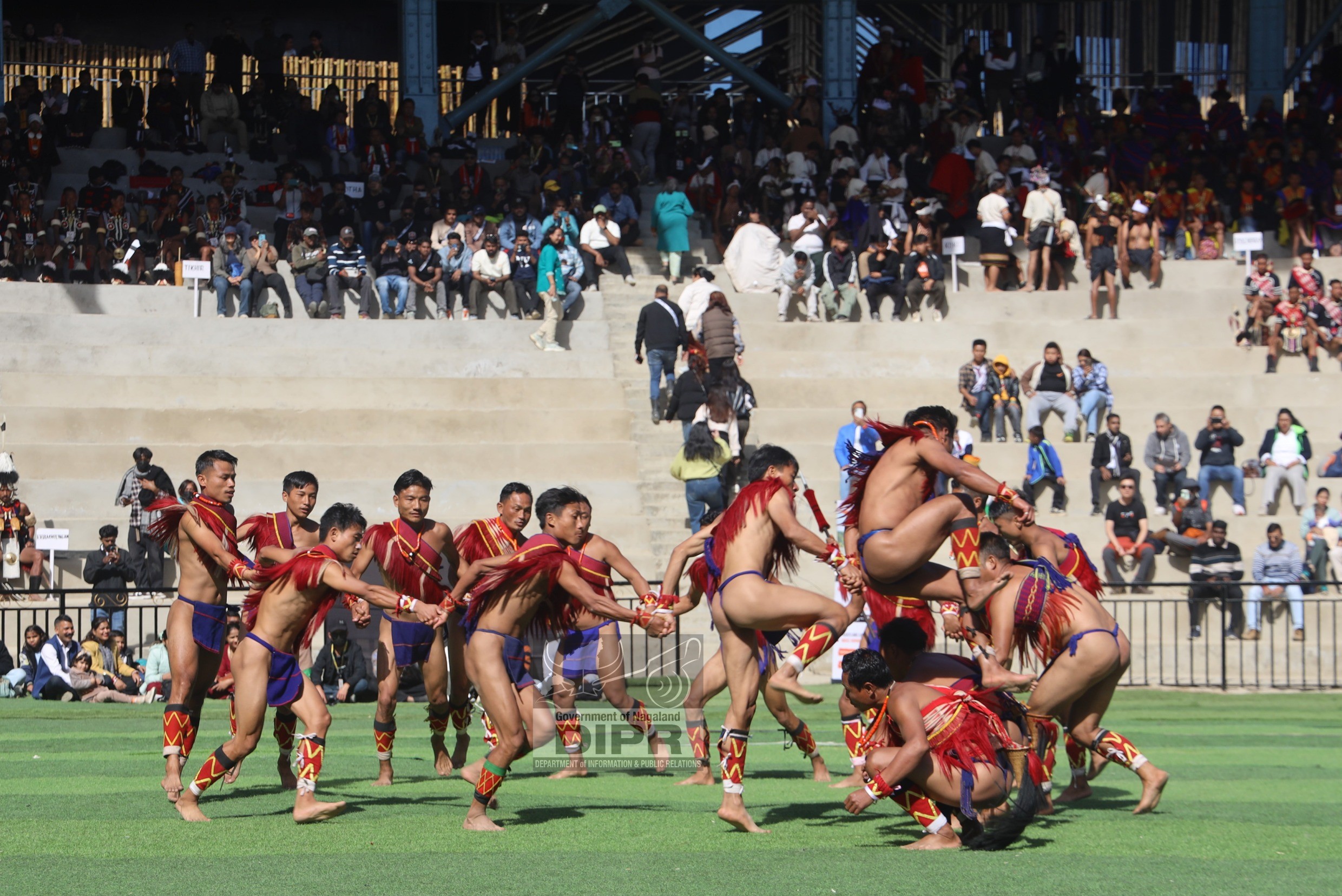
The Lotha troupe performed Kha-Kina Kha-Khungchanthung Na, a traditional game designed to train warriors in jumping and crawling over enemy fences, followed by Kongts Kongyaa, a trial to determine a warrior’s physical readiness for headhunting. The Konyak troupe presented Pong-Win Boa, a Coronation Song depicting the hereditary kingship system of the Konyak Nagas. The coronation of a new king is marked by feasting, dance, cutting of a new log drum, and historically, headhunting to signify power and divine favour.
The Chakhesang troupe performed Chotali, a Song of Procession sung in unison by large groups forming a human chain. The Kuki troupe showcased Salu Lap Lam, a men’s dance invoking animal spirits before the hunting season, accompanied by rituals, feasting, and celebrations. The dance is also performed to honour hunters who return with large game.
The Yimkhiung troupe performed a folk fusion presentation, a popular musical style evolved with the coming of modernity, lyrics are composed or obtained from traditional folk songs and fused with modern and traditional music, fusing this song is to keep this traditional song alive and also to impart them to younger generation. This song is sung in various events and festival to bring warmness to community.
The Zeliang troupe presented Khuigiuna Lin, a song and dance symbolising lovers compared to bees circling joyfully around their hive. The Garo troupe performed Ro’ong Dea (Stone Lifting), an indigenous strength game where participants attempt to lift a 100-kg stone, followed by the Wangala Dance, a post-harvest thanksgiving dance dedicated to Misi Saljong, the Sun God.
The Khiamniungan troupe showcased Poklih Tsuichong, a Victory Dance performed by warriors after successful raids, celebrating their bravery and triumph. The Kachari troupe presented Thaokri Lunai, depicting women extracting yarn from Endi cocoons and preparing to weave cloth traditionally reserved for honoured individuals.
The Chang troupe performed Sekmouoneed, a Cultivating Song sung during farming seasons to motivate villagers working in the fields. The Sumi troupe showcased Aghakighilhe (Crow Dance), a ritualistic performance symbolising mourning for fallen warriors and invoking guidance to defeat enemies.
The Ao troupe performed Ango Kazü, a Fish Dance imitating the swift and rhythmic movements of fishes in rivers, often danced by young boys displaying agility. The Tikhir troupe presented Ngyong Jüh Shoo Ooh, a Rice Pounding Song sung by women as they gather to pound rice for community feasts hosted by wealthy families. The Angami troupe performed Phita (Helim), a traditional dance rendered during special chants and often showcased during festivals.
The Pochury troupe presented Nanoni Hoha, a traditional song and dance celebrating victory, achievements, and communal pride. The Phom troupe concluded with Oh! Phaoshei-yü Jehovah-e Phaoshei-yu, a folksong of praise and thanksgiving to invoke God’s blessings upon Naga people.
The Cultural Show marked a fitting finale to the Hornbill Festival 2025, celebrating unity in diversity and showcasing the rich cultural traditions of the Naga tribes and neighbouring communities.
(Kazuhito, IA)