

The Nagaland Bio-Resource Mission flagged off its first consignment of Zanthoxylum (Michinga/Tomar) seeds to Dabur India Limited (North East Unit), Tezpur, Assam, at a ceremony held at the SIRD Office Complex, Kohima on 6th December 2025.
The seeds will be transported from Kohima to Dabur’s North East Unit in Tezpur, Assam, marking a milestone in the commercialization of Nagaland’s bio-resources.
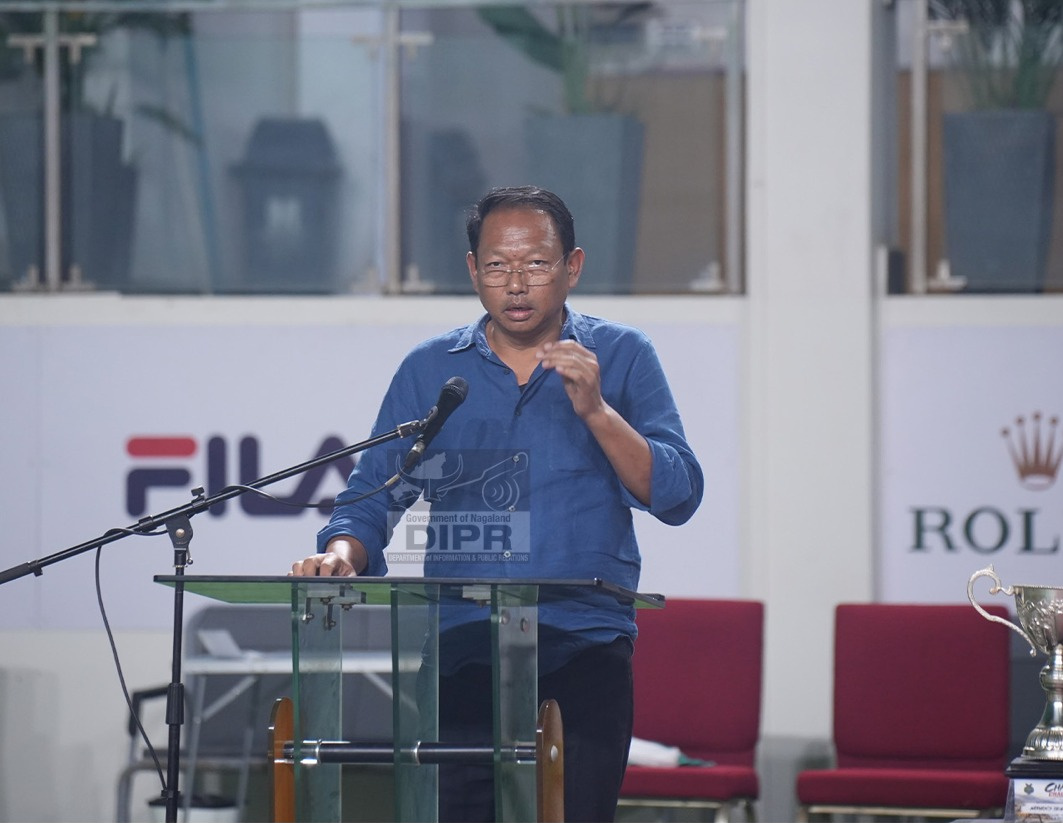
Speaking at the event, Chief Secretary, Sentiyanger Imchen, IAS remarked that unlike many government initiatives, the programme is “a programme of substance where one can see something tangible and concrete.” He highlighted that Nagaland has tremendous potential in medicinal plants and herbs and the Nagaland Bio-Resource Mission was formed to optimise and realise this economic value. Over the past decade, the mission has catalogued medicinal and aromatic plants across the state, which he said was a critical step towards commercialisation.
Commending the team for taking the initiative forward through the MoU signed with Dabur India under a buy-back arrangement, he noted that Zanthoxylum is widely grown and consumed across Nagaland, with both leaves and seeds used locally. Since the crop is already partially commercialised within the state, he said it has strong potential for scaled commercial trade.
Stressing the urgent need to increase production, Imchen stated that although Dabur had requested 10 tonnes, Nagaland could supply only 1.5 tonnes as the first consignment. Calling it “a lesson for all of us,” he said the state must produce in larger volumes to attract buyers. “Nagaland grows many crops, but we are not able to produce sufficient quantities for people from outside to come and buy from us,” he added.
Chief Secretary encouraged entrepreneurs and progressive farmers to adopt scientific cultivation, ensure quality and produce sufficient quantities to meet market demands. He expressed appreciation to Dabur India for partnering with the mission and said he hoped the initiative would lead to “bigger things in the future,” including commercialisation of other plants and herbs from Nagaland.
He urged farmers, entrepreneurs and the Bio-Resource Mission to remain committed, ensure quality produce and continue taking progressive steps towards building a sustainable bio-resource economy for the state.
Head, Central Procurement and Planning Division (CPPD), Dabur India Limited, New Delhi, Narayanan Renganathan in his message shared that Dabur was established in 1884 is a 140-year-old company that began as an Ayurvedic enterprise and continues to depend heavily on medicinal herbs as its core resource. “The company’s bread and butter are basically medicinal herbs,” he said, adding that Dabur has grown into one of India’s largest healthcare brands “mainly because of the contributions of farmers who have supplied medicinal herbs to us for the last 140 years.”
He acknowledged that medicinal herb cultivation and marketing have remained largely unorganised across India for decades. However, he appreciated the recent efforts from state governments to streamline the sector. “In the last few years, we have seen that governments have taken a lot of effort in promoting medicinal herb cultivation and incorporating best practices,” he noted. On Dabur’s part, he shared that the company has been providing quality planting materials, farmer training, and agricultural support to improve cultivation standards.
Citing an example, he said Dabur is already working closely with farmers in Arunachal Pradesh, where 10 metric tonnes of produce are being supplied to the company. He expressed optimism that Nagaland, too, could scale up its volume. “Today we are flagging off with one truck. Soon, I wish to see one truck leaving every month, followed by one truck every week,” he said. He assured farmers that Dabur would support them with planting material, training, and marketing arrangements to help increase production.
Renganathan shared that the potential collaboration between Dabur and Nagaland need not be limited to medicinal herbs. He highlighted opportunities in spices, stating that Dabur consumes large quantities of spices for both its healthcare products and through Badshah Masala, a spice brand owned by the company. He also pointed to opportunities in pineapple processing, noting that although the Northeast is famous for pineapple, “there is no major processing industry here, and so we are buying pineapple pulp from other places.” He suggested that Dabur would be willing to partner in such initiatives if local supply and processing facilities can be developed.
Team Leader Bio resource Mission, Dr Kruolalie Tsúrho also outlined the journey that led to Nagaland’s bio-resource commercialization efforts through the Nagaland Bio-Resource Mission.
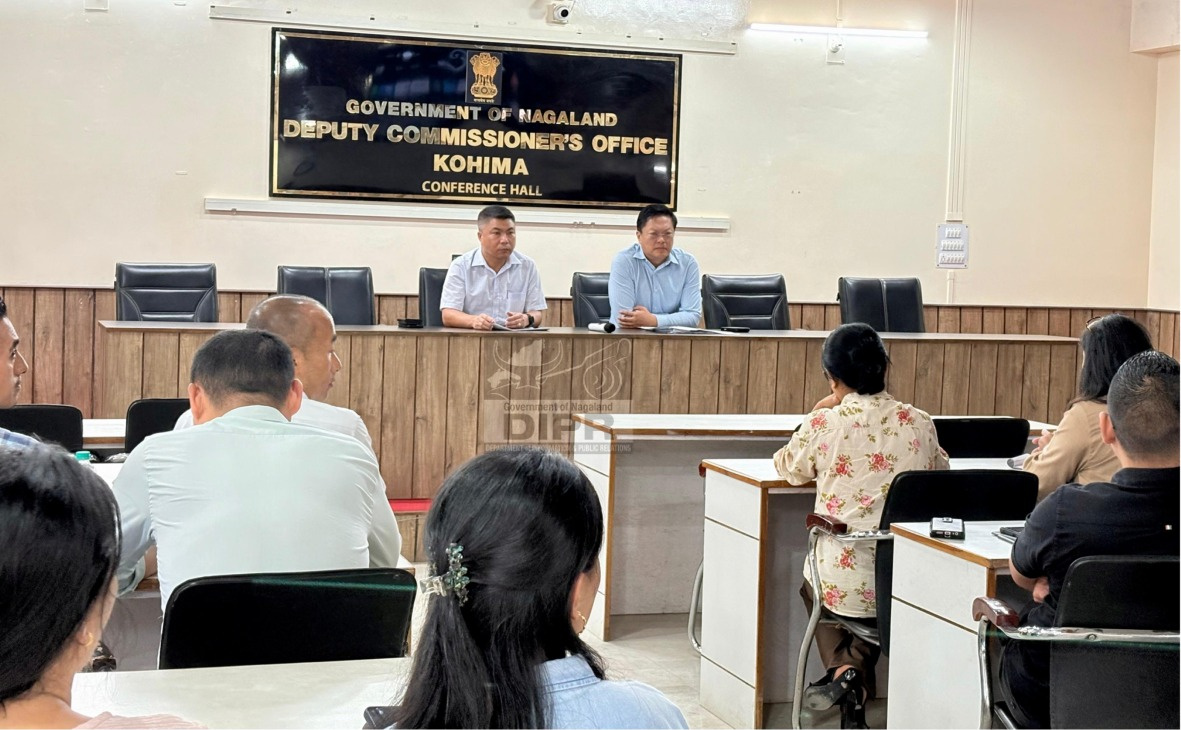
Following the flagged off program a Stakeholder Conclave was held at the SIRD Conference Hall, Kohima, where Dabur India Limited officials interacted with government departments, farmer groups, and mission partners. The meeting focused on quality standards, supply-chain needs, pricing, and long-term procurement plans for Zanthoxylum and other medicinal plants.
The initiative is expected to raise farmers’ income and promote commercial cultivation of bio-resources across rural Nagaland, positioning the state as a potential supplier of premium herbal raw materials. With the first consignment dispatched, the Nagaland Bio-Resource Mission aims to build a sustainable value chain for indigenous species and open new livelihood opportunities.
Earlier, Chief Secretary flagged off the consignment in the presence of senior officials from Dabur India Limited, New Delhi, representatives from the state government, entrepreneurs and framers.
(Esuihangle, IA)