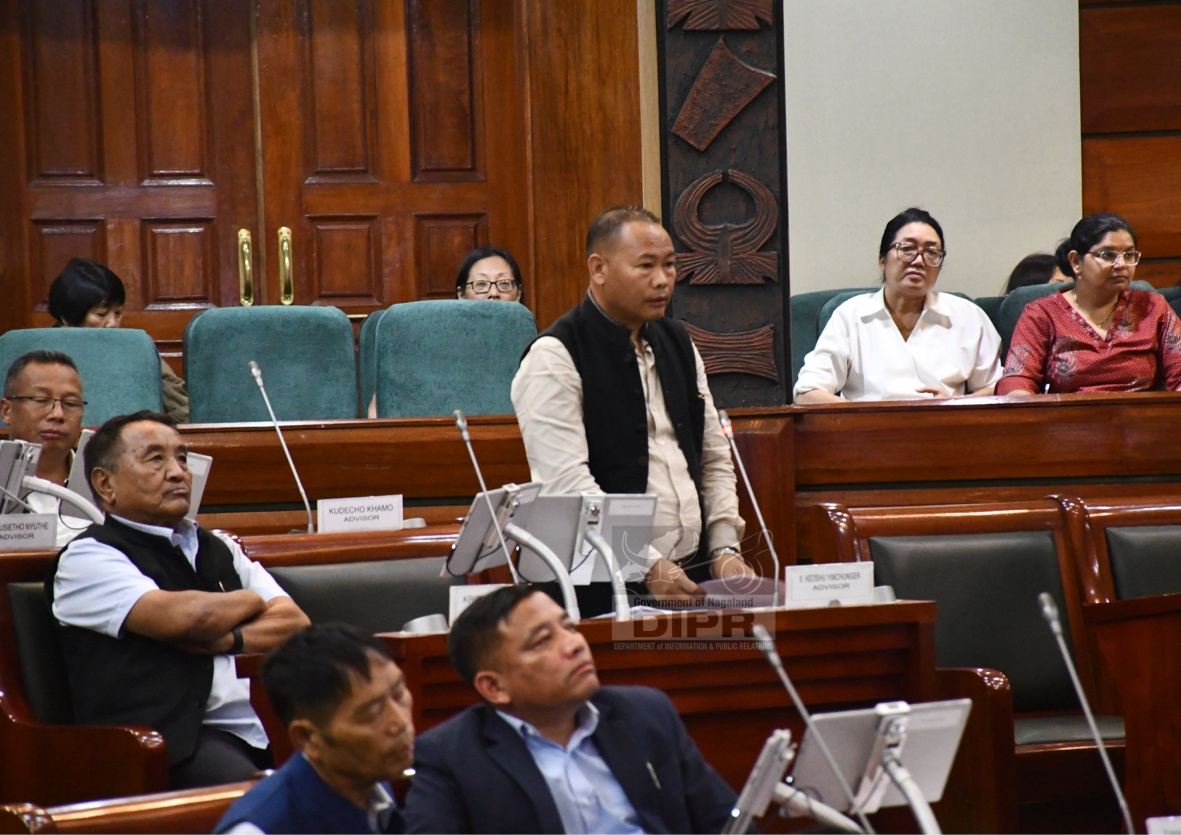
The full text of the concluding remarks by Chief Ministe,r Dr. Neiphiu Rio on the Protected Area Permit during the Ninth Session of the 14th Nagaland Legislative Assembly on 3rd September 2026, is as follows:
“Speaker Sir,
1. I rise to place before this August House an issue of great importance to the people of Nagaland — the continuation of the Protected Area Permit regime in our State.
2. At the outset, I wish to make one thing very clear. The Government of Nagaland fully recognises and respects the responsibility of the Government of India in matters of national security, border management and the regulation of foreign nationals. National security is paramount, and there can be no compromise on the sovereignty, integrity and security of our nation.
3. However, security and development need not be opposing objectives. Regulations must evolve with changing realities. Policies must respond to present-day circumstances. And mechanisms created for one period of history should not become permanent barriers to the aspirations of future generations.
4. Speaker Sir, Nagaland today is peaceful, stable and increasingly connected with the rest of India and the world. The Nagaland of today is very different from the Nagaland of several decades ago. In fact, the security situation in the State of Nagaland over the last 5 (five) years has been one of the most peaceful in the history of the State, since its inception in 1963.
5. This is borne out by the fact that number of incidents related to underground activities from 2004- 2009 was a over 257, resulting in over 120 casualties among cadres of underground groups and civilians, largely arising due to inter-factional clashes, in addition to 6 casualties from the security forces. In stark contrast, in the last preceding 5 years from 2021-2026, the total number of incidents relating to armed groups has drastically reduced to only 8 incidents resulting in 4 casualties among cadres of the underground groups and civilians and 1 casualty from security forces.
6. The comparative figures do not lie, it has been a long-drawn and arduous journey towards peace and progress from the dark days of violence and killings that marred the Naga society not so long ago.
7. As regards the rate of cognizable crime, in the year 2024, it stood at 61.6 per lakh population, which was the second lowest crime rate among the States and UTs after Dadra & Nagar Haveli, compared to the all India crime rate of 418.8 per lakh population as per National crime record data.
8. The peaceful and conducive law and order situation in the State is further reinforced by the fact that crime against women in the State of Nagaland is lowest in the country at 5.1 per lakh population as against the National Crime Rate of crime against women at 64.6.
9. In addition, the India–Myanmar border areas of the State of Nagaland has all along remained fully peaceful, owing to the homogeneous ethnicity and close familial and social ties of the people living on both sides of the border, with no reports of ingress or influx of refugees from across the border into the State.
10. Speaker Sir, as can be seen, Nagaland is, by every yardstick, one of the most peaceful States in the country. While there may have been security concerns in other States in the North East when the decision to re-impose PAP was taken by the Central Government in December 2024 in certain States, including Nagaland- the situation in Nagaland is vastly different from that of the others. In fact, the present situation in Nagaland does not warrant the imposition of any such restriction.
11. Speaker Sir, Nagaland is a small State. We are predominantly mountainous. We face geographical disadvantages, infrastructure constraints, limited industrialisation and a relatively small domestic market.
12. Therefore, we must identify and strengthen sectors in which Nagaland has natural advantages. Tourism is one such sector. For Nagaland, tourism is not merely about visitors coming to see our landscapes or attend our festivals. Tourism is an economy. It supports hotels and homestays. It supports restaurants, transporters, tour operators and tourist guides. It supports farmers, artisans, musicians, performers, event managers, craftsmen, designers and entrepreneurs. Most importantly, it creates opportunities for our youth.
13. As a matter of fact, during the 2023 edition of the Hornbill Festival, a Government survey recorded over ₹2.76 crore in hotel accommodation revenue in just ten days which is a clear indication of how tourism spending reaches far beyond any single festival ground and into towns across our State.
14. Speaker Sir, over the years, the Government of Nagaland has made substantial efforts to promote tourism through infrastructure, connectivity, policy, destination development and events. Our people have responded with equal enthusiasm. Entrepreneurs across the State have invested their own resources into homestays, hotels, restaurants, travel businesses, events and other tourism-related enterprises. This growing ecosystem is today providing livelihoods and employment to thousands of our citizens.
15. Our identity as the “Land of Festivals” has become one of Nagaland’s strongest tourism brands. But the idea of the “Land of Festivals” is much deeper than tourism. It is about protecting our culture. It is about preserving the heritage of every Naga tribe. It is about ensuring that our songs, dances, traditions, crafts, cuisine, attire and customs are passed on to future generations. This spirit is in fact not only confined to Kisama, or in the month of December. Across Nagaland, individual tribes and communities celebrate their own Mini Hornbill festivals throughout the year, each rooted in that community's distinct identity and tradition.
16. At the same time, our culture must also create dignity and economic opportunity for the people who preserve it. Our artisans must be able to earn from their skills. Our musicians must find platforms. Our performers must find audiences. Our entrepreneurs must be able to build enterprises around tourism and the creative economy. This vision finds its highest expression in the Hornbill Festival - the Festival of Festivals.
17. In December 2026, Nagaland will commemorate the 27th edition of the Hornbill Festival. What began as a small cultural event has today grown into one of the most recognised festivals in India. In 2010, the Festival drew a total footfall of just over 28,000 visitors. By 2025, that figure had grown more than 7 seven (times) crossing 2,14, 000 visitors.
18. The Hornbill Festival is no longer merely a celebration. It has become an engine of economic activity. It creates thousands of jobs and livelihood opportunities. It gives platforms to entrepreneurs. It supports our hospitality and tourism sectors. It showcases our artists and musicians. It brings visitors from across India and from abroad.
19. It has also become a platform for cultural diplomacy, investment promotion and international partnership. Partner Countries, diplomatic missions, international organisations, investors, artists and institutions increasingly participate in the Festival. In 2023, the Festival hosted three country partners. By 2025, this had grown to seven nations in a single edition which was more than double in just two years.
20. Business and Investment Roundtables conducted during the Festival have opened doors for partnerships in tourism, agriculture, education, human resource development, technology, culture and the creative economy.
21. This is why the continuation of the Protected Area Permit regime has implications far beyond the inconvenience faced by a tourist. It affects tourism. It affects investment. It affects international partnerships. It affects cultural exchanges. It affects diplomatic participation. And ultimately, it affects the opportunities available to our own people.
22. When a foreign visitor hears the words “Protected Area Permit”, the very terminology can create an impression that Nagaland is unsafe or inaccessible. That does not reflect the reality of Nagaland today. When an investor or international organisation has to navigate additional procedures and uncertainty before entering the State, it becomes easier for them to choose another destination. When tourists stay away, our homestays, hotels, guides, taxi operators and entrepreneurs lose business. When investors stay away, our youth lose opportunities.
23. It may be noted that in 2010, total number of foreign tourists at Kisama stood at 284. By 2025, foreign arrivals had grown to 2,528, most of that growth coming between 2011 and 2023, the very years the Protected Area Permit regime was relaxed.
24. The State Government has repeatedly taken up this issue with the Government of India. The State Cabinet has deliberated on the matter on several occasions. The issue has also been continuously raised by me at the highest levels.
25. Our consistent position has been that the continuation of the PAP regime in its present form does not reflect the prevailing circumstances in Nagaland and adversely affects our developmental interests. The experience during the Hornbill Festival of 2025 clearly demonstrated this problem.
26. Relaxation of the PAP regime for the Festival came only immediately before its commencement. We appreciated the relaxation. But international travel cannot be planned overnight. Visitors require time for visas, tickets, accommodation, official approvals and other arrangements. Investors, diplomatic missions, artists and institutions plan months in advance. A temporary relaxation announced immediately before an international event cannot provide the certainty that is required. That is why Nagaland needs a more permanent and practical solution.
27. Speaker Sir, our request is not for the absence of regulation. Our request is for better regulation. Technology today gives us the means to achieve both security and ease of travel. The State Government is prepared to put in place a robust technology-driven mechanism for the registration and monitoring of foreign visitors. Passport and visa details, travel itineraries, accommodation information and duration of stay can be digitally registered. Relevant information can be made available to authorised security and administrative agencies. District administrations, police authorities and tourism agencies can work through an integrated system.
28. In this way, genuine visitors can be facilitated while the security interests of the nation remain fully protected. We believe this is a practical, modern and responsible way forward.
29. Speaker Sir, we must also look at this matter from the perspective of our youth. The youth of Nagaland are talented, ambitious and connected to the world. They want opportunities in tourism, sports, music, technology, entrepreneurship, hospitality, fashion and the creative economy.
30. For many decades, geography, history, limited connectivity and lack of opportunity constrained generations of our young people. We cannot allow unnecessary barriers to constrain another generation. Our youth want to compete. They want to innovate. They want to build businesses. They want to collaborate with the world. They want to participate in India’s growth story. And they want to contribute to nation building. It is our duty to create the environment in which they can succeed.
31. Nagaland’s artists, musicians, sportspersons, entrepreneurs and cultural ambassadors today contribute not only to our State, but to the diversity and image of India. Our culture strengthens India’s soft power. Our festivals bring people together. Our youth carry the name of Nagaland and India across the country and the world. These are contributions to national integration and nation building.
32. The people of Nagaland therefore deserve an environment where such opportunities are expanded, not restricted. This concern is not limited to the Government alone. Tribal organisations, civil society bodies, tourism stakeholders, entrepreneurs, investment agencies and many sections of Naga society have repeatedly expressed their concern over the continuation of the PAP regime.
33. It is therefore time for this House to speak with one voice. We respectfully appeal to the Government of India to urgently review and withdraw, or appropriately relax, the Protected Area Permit regime presently applicable to Nagaland.
34. We request the Government of India to take into consideration the peaceful environment prevailing in our State, the aspirations of our people, the importance of tourism and investment to our economy, and the hopes of our youth.
35. We also assure the Government of India that Nagaland remains fully committed to national security, peace and stability. Security and development can go together. Progress and responsibility can go together. Openness and national interest can go together. Nagaland seeks peace. Nagaland seeks progress. Nagaland seeks investment.
36. Nagaland seeks greater opportunities for its youth. Nagaland seeks to welcome genuine visitors, partners and friends from India and across the world. And Nagaland seeks to do all of this while fully protecting the security and national interests of our country.
37. Speaker Sir, I therefore appeal through you to all Hon’ble Members of this House, cutting across political affiliations, to lend their collective voice to this important issue and to consider for adopting the tabled Resolution for appealing to the Government of India to urgently review and withdraw the Protected Area Permit regime presently applicable to the State of Nagaland and restore the relaxation that had earlier been in operation.
38. Let this House send a clear and united message. Let us create pathways, not barriers. Let us give our youth opportunities, not restrictions.
Thank you, Speaker Sir.”