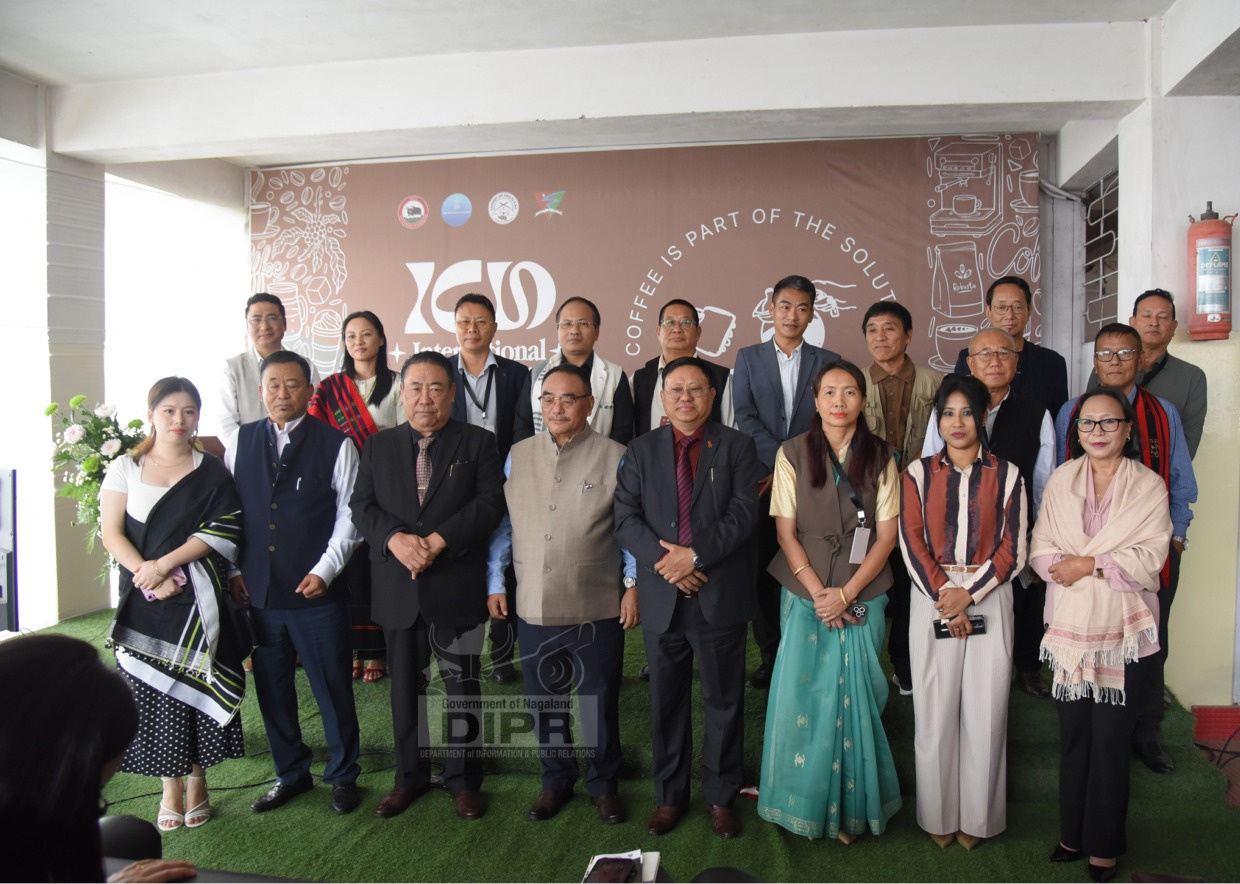
The Directorate of Land Resources, Government of Nagaland, observed International Coffee Day 2026 on 1st October, 2026 at the Directorate of Land Resources, Kohima, with a programme highlighting the potential of coffee cultivation, value-chain development and emerging opportunities for Nagaland’s coffee sector.
The programme was held on the theme “Coffee is Part of the Solution”, with Advisor, Land Resources, Government of Nagaland, G. Ikuto Zhimomi, as the Host.
In his address, G. Ikuto Zhimomi highlighted that this year’s theme, “Coffee is Part of the Solution,” underscores the role of coffee in addressing wider challenges through support to growers, collaboration, sustainability, climate resilience, innovation and inclusive development.
He stated that coffee has been identified as a Unique Selling Proposition (USP) of Nagaland) and noted that the Coffees of Nagaland Mission was launched on 19th May 2026 in New Delhi by the Union Minister for Development of North Eastern Region, in the presence of the Nagaland Chief Minister and Deputy Chief Minister. The mission aims to establish Nagaland as a distinct origin-based specialty coffee brand with global recognition. Under the initiative, cluster-based coffee value-chain development has been taken up through two pilot projects—Tuophema cluster in Kohima district for Arabica coffee and Ghotovi cluster in Niuland district for Robusta coffee.
Ikuto also highlighted the “Coffees of Nagaland” documentary, which showcases the journey of coffee from farm to cup, the employment opportunities generated by the sector and its potential to reach international markets. He emphasised that coffee is not merely a popular beverage but an important source of income and livelihood, connecting agriculture, trade, employment, business and culture.
He observed that the strategic development of Nagaland’s coffee sector presents an opportunity for sustainable rural transformation, by leveraging the State’s agro-climatic advantages and responding to the growing demand for specialty coffee. Continued investment and support across the coffee value chain, he said, would contribute to inclusive economic growth, climate-resilient land-use systems, greater global visibility for Nagaland coffee and long-term economic resilience for rural communities.
Emphasising the role of the younger generation, he said that youth must be at the centre of this transformation and envisioned Coffees of Nagaland as a brand that would carry the story of Nagaland to India and the world. He concluded by calling for every cup of Nagaland coffee to tell the story of its soil, farmers, youth, enterprises and environment, and expressed the aspiration to take Nagaland coffee to national and international markets.
Advisor for Labour, Employment & Skill Development and Excise, Moatoshi Longkumer in his brief remarks, recalled his association with the department and its evolution since its establishment in 1993.
Speaking on International Coffee Day, he highlighted the department’s contributions to afforestation, natural resource conservation and livelihood generation, including the introduction of rubber cultivation in collaboration with the Rubber Board of India. He stated that coffee represents a new expression of the department’s original objective of linking land, water and people with sustainable rural livelihoods.
He described coffee as an economic ecosystem rather than merely a plantation crop, stressing the importance of improving quality, value addition and farmer livelihoods. He said the future of Nagaland Coffee would depend on farmers, enabling coffee to emerge as a genuine rural industry and carry the identity of Nagaland beyond its borders.
The programme commenced with the welcome address and an overview of coffee development in Nagaland by CEO, SLNA and Director, Land Resources, Government of Nagaland, Albert Ngullie. He highlighted that International Coffee Day, observed annually on 1st October under the International Coffee Organization, provides an opportunity to recognise the millions of people whose livelihoods depend on coffee and to promote a fairer, more resilient and sustainable coffee.
He traced the State’s coffee journey from the introduction of coffee as an alternative cash crop in 1981 by the Coffee Board of India and the Nagaland Plantation Crops Development Corporation, to the handover of plantations to local communities in 1991, the revival led by the Department of Land Resources from 2014–15, and the adoption of coffee as a unique selling proposition for Nagaland in 2026. He outlined the Department’s priorities ahead, including expanding cultivation, improving productivity and quality, strengthening skills across the value chain, completing branding and certification, and positioning coffee as a sustainable alternative livelihood rooted in the State’s landscape.
Khenyen Konyak, Coffee Grower, Tobu, Mon, shared his experience of starting coffee plantation and spoke about the challenges faced by growers, including poor road conditions during the initial days. He appreciated the support provided by the Department of Land Resources, including machinery, saplings and field visits, and encouraged farmers to work with a clear vision for the future.
Director Marketing, Lithanro Pvt. Ltd. and Founder & Proprietor, Juro Coffeehouse, Searon Yanthan, highlighted the company’s six to seven years of work in building a farm-to-cup coffee ecosystem, with growing markets in India, Canada and the UK. He encouraged youth to explore opportunities across the coffee value chain and urged farmers to focus on quality, consistency and proper post-harvest practices On the theme, “Shaping Opportunities and a Distinct Identity for Nagaland Coffees.” The role of the Board in promoting coffee development through technical support, training and capacity-building programmes was highlighted, along with Nagaland’s favourable agro-climatic conditions and potential in the specialty coffee sector. Emphasis was also laid on quality improvement, value addition, market identity and agri-tourism, while acknowledging the continued support of the Land Resources Department in promoting Nagaland coffee and taking it to the global platform.
General Manager, Officer-in-Charge, NABARD, Nagaland Regional Office, Pauliankap Bulte, spoke on “Financing Growth and Opportunities in Nagaland’s Coffee Sector.” He stated that NABARD supports financial literacy programmes conducted through banks, with around 500–600 programmes held across Nagaland, besides supporting Centres for Financial Literacy in 15 locations.
On coffee development, he highlighted NABARD’s partnership with the Land Resources Department (LRD) through the Rural Infrastructure Development Fund (RIDF), as well as support extended to coffee value-chain development projects. He emphasised the need to create a conducive policy environment for farmers and entrepreneurs to access bank finance for cultivation, processing, marketing and branding. He also pointed to Nagaland’s unique land ownership system as a challenge to accessing institutional credit and called for appropriate policy measures to facilitate bank financing and promote coffee development.
Further, Director (Tourism & Industries), North Eastern Council (NEC) Secretariat, Shillong, Ministry of Development of North Eastern Region (MDoNER), Dr Sentitula, IFS, highlighted coffee as Nagaland’s unique selling proposition and the importance of developing the sector as a complete value chain. She stated that the NEC is supporting the State Government as a funding and guiding agency for the mission.
She outlined the vision of strengthening the coffee sector from cultivation and quality planting material to processing, QR-based traceability, GI tagging, branding, marketing and export. She emphasised that developing the entire value chain within Nagaland would enhance the value of coffee and ensure greater benefits for farmers.
The programme also witnessed the launch and screening of the coffee documentary “Coffees of Nagaland” by former LRD Officer, Advisor, Labour, Employment & Skill Development and Excise, Moatoshi Longkumer.
The programme continued with the release of coffee brochures/publications by Dr Sentitula, IFS, followed by the release of the book “Coffee Cultivation” by Dr. Mary N. Odyuo and Khrielanuo Khezhie, released by Advisor, Land Resources, Government of Nagaland, G. Ikuto Zhimomi.
The programme concluded with the Vote of Thanks proposed by Additional Director, Land Resources and Project Director, Coffees of Nagaland (USP), Government of Nagaland, Hekato N.
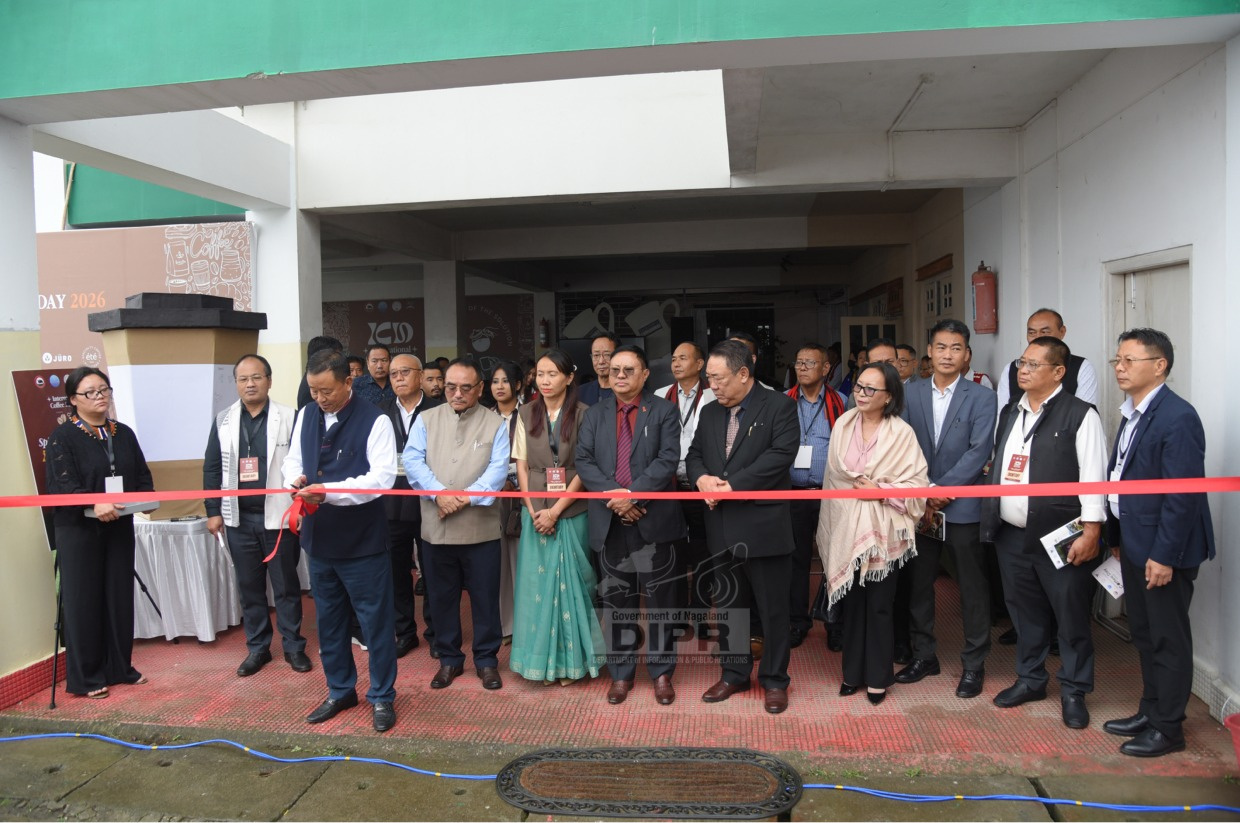
The formal programme was followed by the flagging off of coffee events and activities by Advisor, Fisheries & Aquatic Resources, Pangjung Jamir, marking the commencement of a series of activities associated with International Coffee Day 2026 in the State.
(Mainodi Naben, IA)