Photo News · Kohima
On the occasion of the World Toilet Day, celebrated globally on November 19th, the Department of Drinking Water and Sanitation, Ministry of Jal Shakti, launched the ‘Swachh Shauchalay - Garimamay Bhavishya [SSGB]’ campaign on 19th November 2026. The campaign will conclude on Human Rights Day, 10th December 2026.
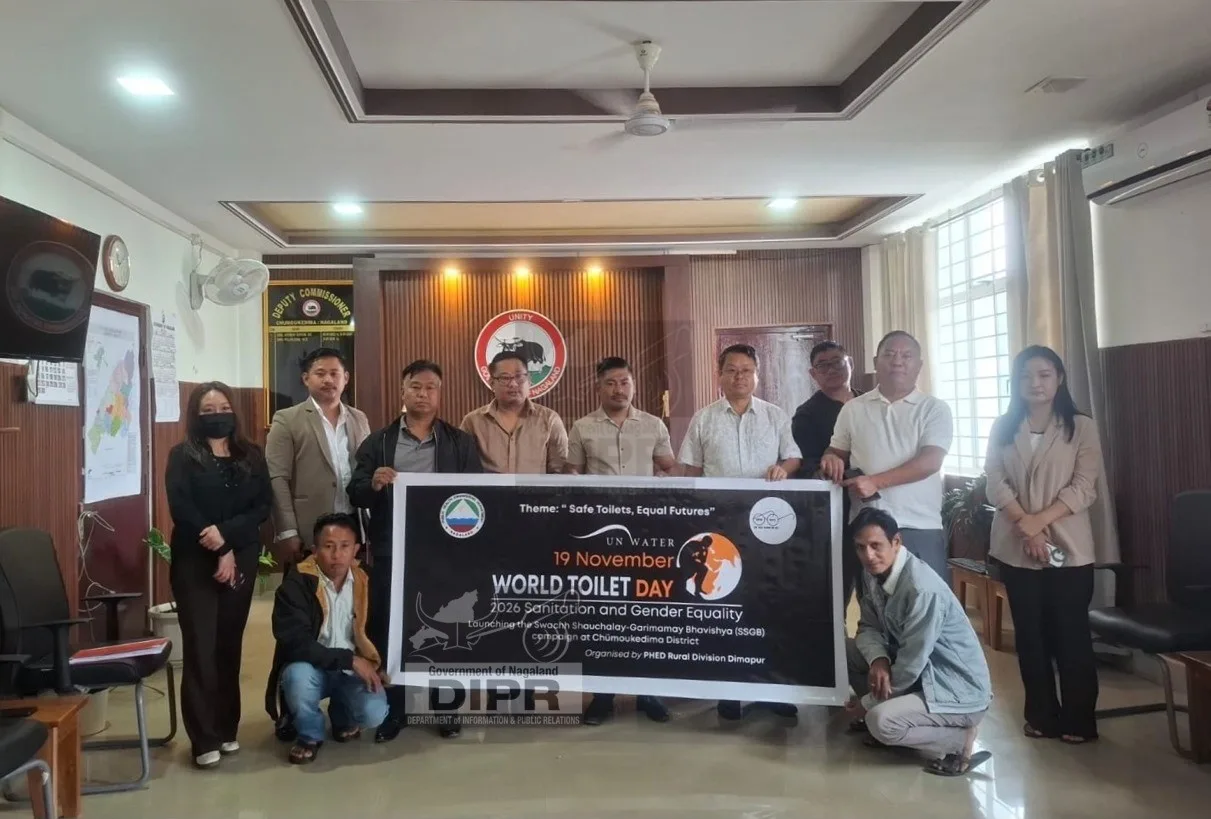
Deputy Commissioner Chümoukedima, Polan John launched the ‘Swachh Sauchalaya, Garimamay Bhavishya-Safe Toilets, Equal Future’ campaign for Chümoukedima district, commemorating the World Toilet Day at the DC complex in Chümoukedima, on 19th November 2026, in collaboration with officers from District Administration, PHED and representatives of the District Water and Sanitation Mission.
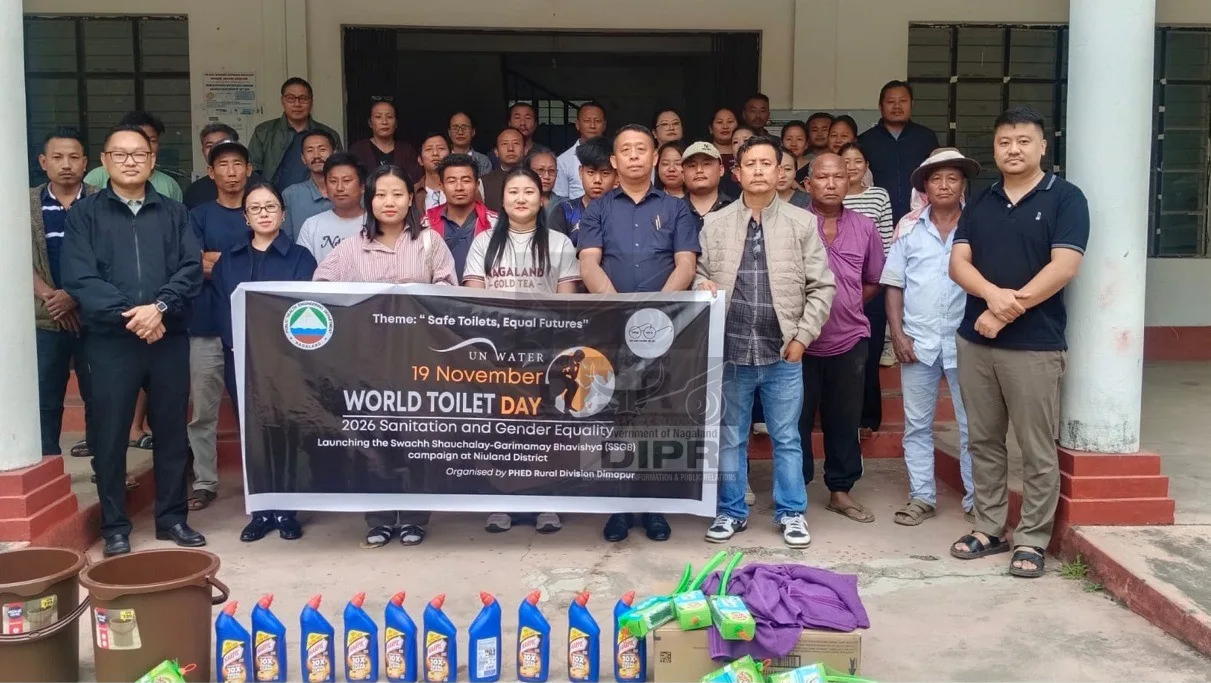
Deputy Commissioner Niuland, T.L Kiusumong Tikhir, also launched the ‘Swachh Sauchalaya, Garimamay Bhavishya-Safe Toilets, Equal Future’ campaign for Niuland district at the DC Office, Niuland HQ on the occasion of World Toilet Day. The programme was held in the presence of PHED, District Administration and staff.
The theme for the World Toilet Day 2026 is ‘Safe Toilets, Equal Future’. The theme emphasises the link between sanitation and gender equality. It aims to enhance the functionality, safety, and accessibility of toilets in rural areas, particularly addressing the needs of women, girl students, and divyangjan.
Sanitation deficiencies impact entire communities and pose greater health and safety risks to women and girls, restricting their participation in education, work, and community life. Women’s involvement in planning and managing sanitation services ensures that toilets meet the requirements of all users and are accessible to all.
The campaign aims to ensure that all individuals, village councils, school authorities, anganwadi centres, and citizens have access to toilets, particularly women and people with disabilities. Additionally, the campaign encourages communities to assess their existing community toilets and undertake necessary repairs or restorations.
(DPRO Chumoukedima)