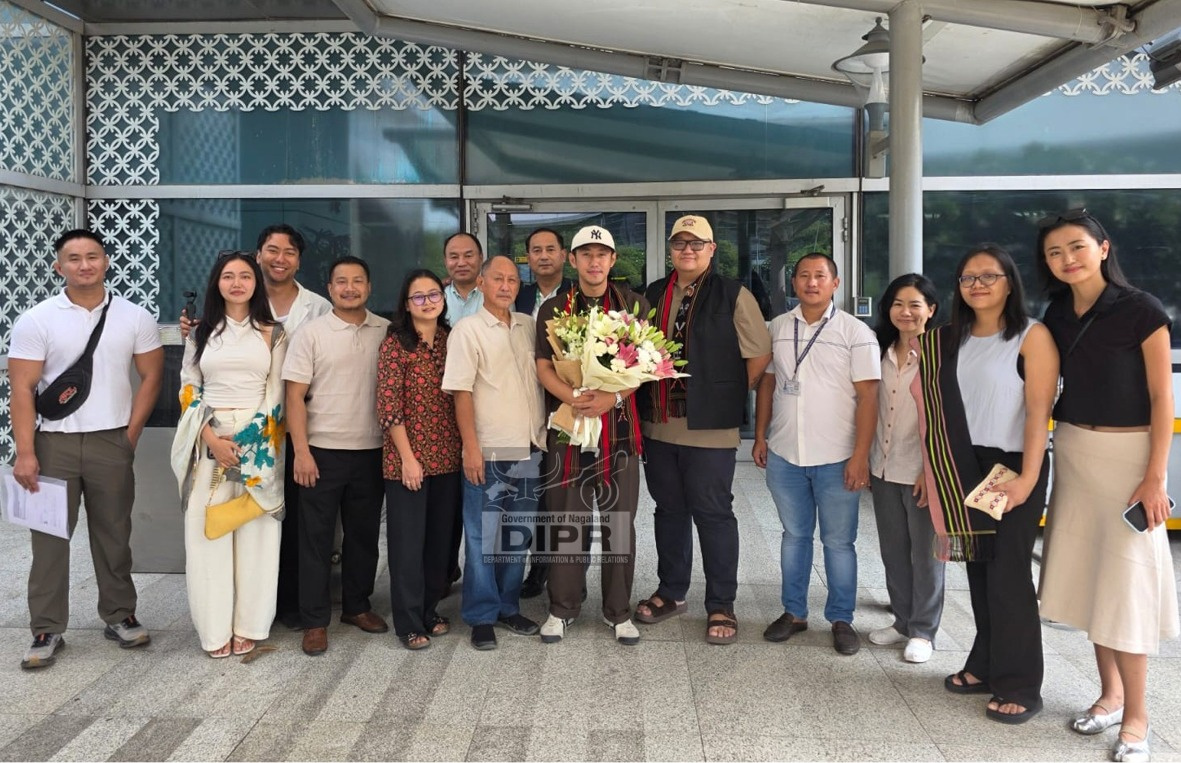

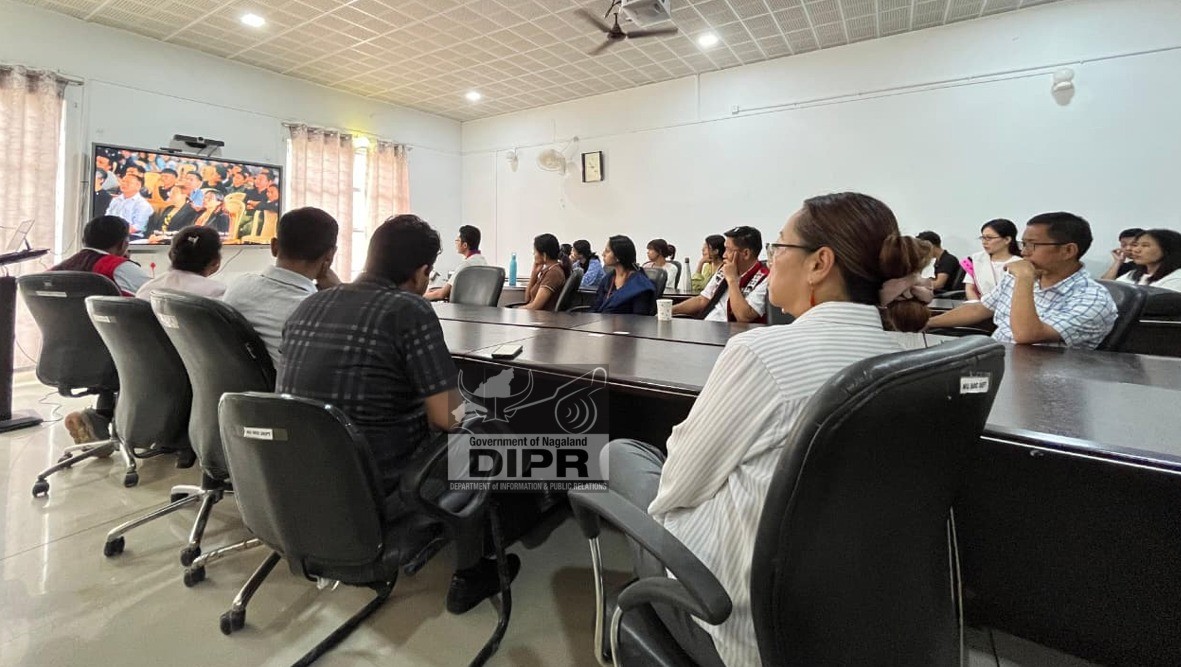
The Tribal Research Centre (TRC), Nagaland University, organised the Nagaland premiere screening of the documentary film titled, ‘A Sacred Place’ on Friday, bringing together faculty members, research scholars, and students from different departments in both offline and online modes at NU Lumami, on 25th April 2026.
Dr. Yamsani Srikanth, Assistant Professor, Department of Sociology, TRC, Nagaland University, welcomed participants and noted that this was the first time the university had hosted a film screening of this kind. He also provided a brief introduction about film making.
A Sacred Place” tells the story of stones, spirits, and salt springs in Makhel. In the Mao Naga language, Makhel means “A Sacred Place.” The Naga ancestors regarded these geological features as the most spirits custodians. The film focuses on intergenerational storytellers and their relationship with the land. It integrates visual ethnography, oral traditions, and the geological features of Makhel to center Indigenous pedagogy and ecology. Ultimately, the film seeks to ask whether sacredness can still exist in the face of ecocide in our times.
The 40-minute screening was followed by a discussion session, during which Dr. Srikanth presented brief biographical notes on the film’s director and producer, Prof. Dolly Kikon, and the discussant, Dr. Rongsenzulu Jamir of the University of Hyderabad.
In her remarks, Dr. Jamir congratulated Prof. Kikon and her team for the project and engaged with questions on the film’s conceptual origins, the shift from academic writing to filmmaking, and the possibility of sustaining sacredness amid ecocide. Responding to queries, Prof. Kikon reflected on the collaborative and interdisciplinary nature of the project, noting that it brought together anthropologists, geologists, and local communities. She emphasised that indigenous scholars irrespective of the discipline is deeply rooted in storytelling and reciprocity, and highlighted the importance of community participation in both research and exhibition practices.
She also underscored concerns about extractive research practices, noting the tendency of external researchers to collect data without returning to engage with communities. Describing the project as a form of collaborative knowledge production, she encouraged the indigenous thinkers and scholars to “return to their roots” and contribute meaningfully to the communities they study.
The programme concluded with a vote of thanks delivered by Repakaba Tzudir, Research Scholar, Department of Sociology, who expressed gratitude to Prof. Kikon and Dr. Jamir for their participation and contributions to the event.
(DIPR)