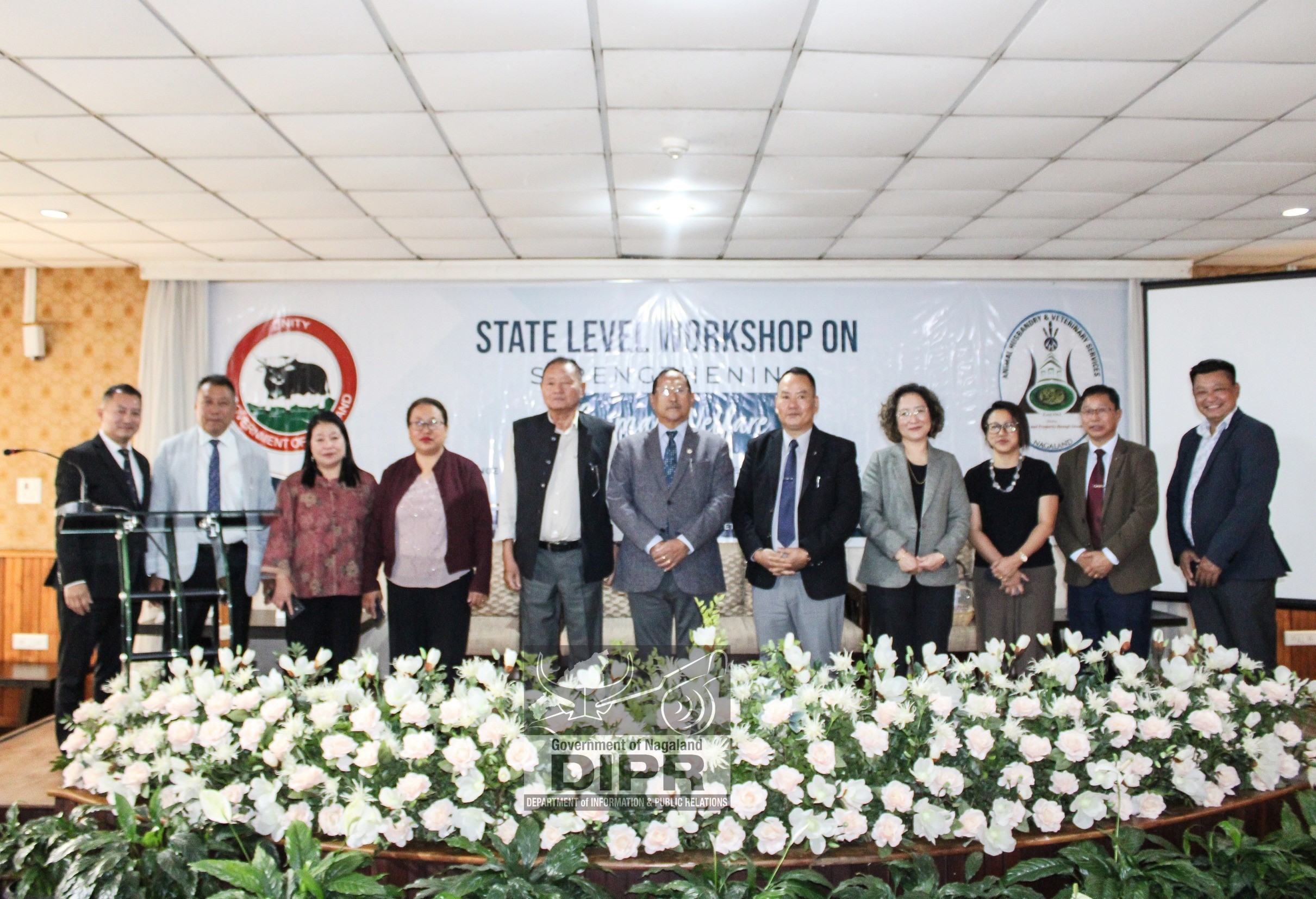
A state-level workshop aimed at strengthening animal welfare began on 19th March, 2026, at Hotel de Oriental Grand, Kohima, under the initiative of the Animal Husbandry and Veterinary Department.
Addressing the gathering, Advisor for Animal Husbandry and Veterinary Services and Chairman of SAWAB-N, Kazheto Kinimi, emphasised the need to institutionalise animal welfare practices across the state. He highlighted that animal welfare is deeply intertwined with Naga culture and the rural economy, making it both a social responsibility and an economic priority.
Kinimi pointed out that the state government has taken several steps to improve veterinary infrastructure and healthcare services. He noted that the introduction of Mobile Veterinary Units has significantly enhanced outreach, delivering essential services to farmers in remote areas. Stressing the importance of compassion, he called on citizens to ensure humane treatment of animals, adding that the sector also supports livelihoods through the production of meat, milk and eggs. He stressed that ensuring animal welfare is a shared responsibility that requires collective effort for sustainable development.
Advisor for Urban Development and Municipal Affairs, Zhaleo Rio,IAS (Retd) in his address, highlighted that animal welfare is intrinsically linked to human welfare. He described the workshop as highly significant, bringing together various stakeholders including government departments, civil societies, SPACs, and legal experts to strengthen enforcement of animal protection laws. He urged Urban Local Bodies to go beyond routine civic duties and organise dedicated programmes on animal welfare and livestock management. Emphasising humane treatment, he called for regulated slaughtering practices, hygienic meat sales, and the prevention of slaughter in public spaces, while noting that abattoir machinery would soon be commissioned to improve standards. Zhaleo also encouraged closer coordination with the veterinary department and highlighted the need for cleanliness and proper animal care. Commending the Mokokchung Municipal Council, he praised the Mokokchung Municipal Council for its good functioning and for setting a good example for all. He urged participants to apply and share the knowledge gained. He further emphasised strategic planning, effective use of powers by ULBs, and collective efforts to enhance both animal and human welfare, expressing hope for building a compassionate and responsible future.
In his introductory remarks, Organising Secretary, Dr. Ilang said the workshop aims to expand awareness on animal welfare and strengthen grassroots implementation through State Animal Welfare Advisory Board members and urban local bodies. He highlighted key principles centred on humane treatment of animals, including the “five freedoms” access to food and water, proper shelter, freedom from hunger and discomfort, the ability to express natural behaviour, and protection from fear and distress as outlined under the Prevention of Cruelty to Animals Act, 1960. He further stressed the need to take such awareness campaigns to all districts and sensitise the public on responsible animal care. Noting the growing importance of the sector, he added that animal husbandry and dairy continue to make a significant contribution to the national economy, underscoring the need for sustained focus and policy support.
Dr. Imomanen Tzudir, Director, Department of Animal Husbandry & Veterinary Services, Nagaland, delivered the welcome address, describing animal welfare as a complex and sensitive issue involving social scientists, activists, veterinary experts, policymakers, and administrative machinery. He emphasised that it concerns our relationship with animals and our ethical responsibilities towards species affected by human activities, and called for a paradigm shift in human interaction with animals for the benefit of both. Highlighting its global significance, Tzudir noted that nearly one-fifth of the world’s population is engaged in livestock production and the processing and marketing of animal-based food. He further pointed out that over 80 billion terrestrial animals are raised for human consumption annually, excluding aquatic species. Stressing their broader role, he said animals are vital for income, transport, protection, recreation, companionship, and ecological balance, adding that promoting animal welfare would help build a harmonious and sustainable relationship between humans, animals, and the environment.
Lanuakam, Deputy Chairperson, Mokokchung Municipal Council, spoke on the role of Town Councils in promoting animal welfare, stating that animal welfare is not only a legal obligation but a reflection of a humane and progressive society. He highlighted its connection to public health, environmental sustainability, and urban quality of life. Referring to the Nagaland Municipal Act, 2023 and the Prevention of Cruelty to Animals Act, 1960, he noted that Urban Local Bodies have a clear mandate to prevent cruelty and promote responsible animal care through systematic registration, vaccination, and population control measures. Citing Mokokchung as an example, he said the 2017 Dog Registration and Proper Control Rules led to over 2,200 dogs being registered and nearly 1,900 vaccinated in a single drive, with continued annual anti-rabies campaigns ensuring community participation. Lanuakum added that these efforts have improved cleanliness, controlled stray dog movement, and reduced severe dog bite cases. Acknowledging challenges, he said the Council is adopting a more science-based approach focusing on vaccination, sterilisation, and data-driven planning, with updated regulations underway.
The programme was compered by Dr. Tolto Metha, with Dr. Elizabeth Yhome and Dr. Khrisamhazo Rhetso serving as rapporteurs.
The workshop also highlighted key aspects of animal welfare, emphasising that it involves ensuring animals are treated humanely and are free from unnecessary pain, fear and distress. Participants were sensitised on the widely accepted “Five Freedoms of Animal Welfare". The session further underlined that animal welfare in India is guided by the Prevention of Cruelty to Animals Act, 1960, which provides legal safeguards against cruelty and supports the establishment of welfare institutions.
(Takumpula Longkumer, IA and Mainodi, IA)