

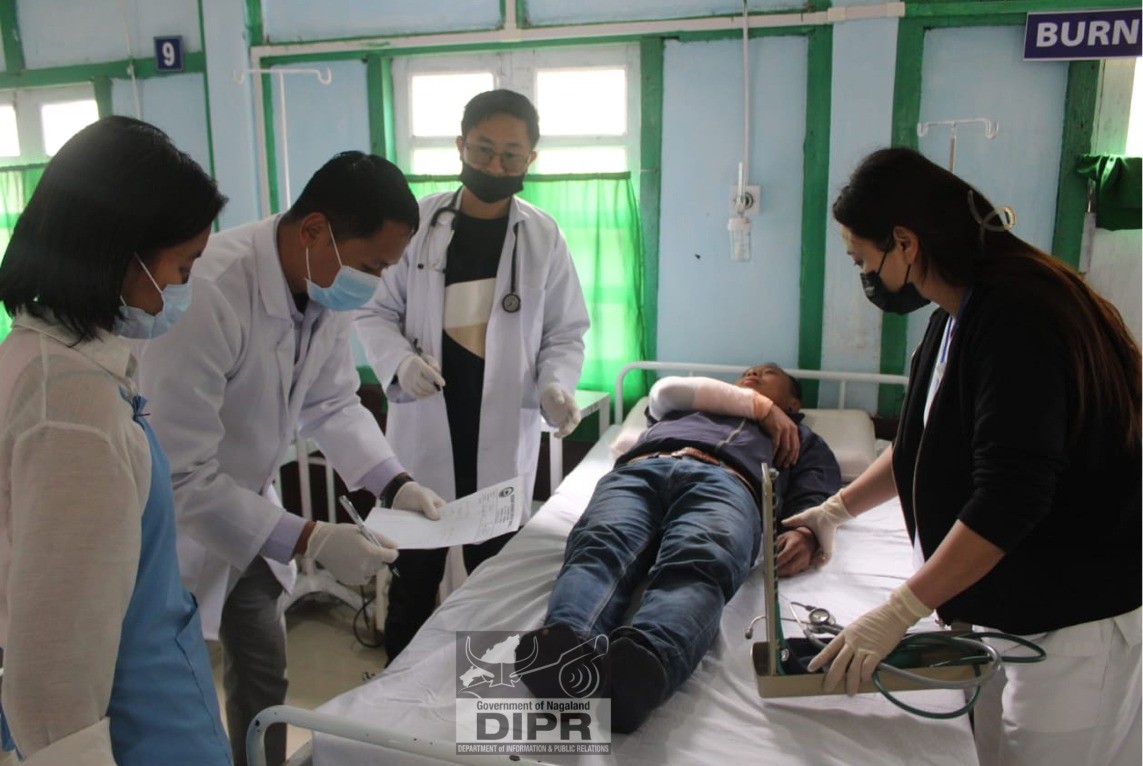
A large-scale mock exercise under the Nagaland Emergency Preparedness Exercise (NEPEx) was conducted in Zunheboto District to assess disaster response readiness in the event of a major earthquake.
The simulation was based on a hypothetical 7.7 magnitude earthquake striking the district at around 8:00 AM, triggering massive landslides, fires, and widespread building collapses. The scenario depicted a severe humanitarian crisis, with around 450 houses damaged, affecting over 1,000 families.
As per the exercise, 16 fatalities were reported, including men, women, infants and elderly persons, while 50 people were injured, with at least 10 in critical condition requiring urgent medical attention. Authorities also simulated 100 individuals missing under debris.
The mock situation highlighted the collapse of district hospital, resulting in a shortage of medical supplies and manpower. Key road connectivity, including NH-702A linking Zunheboto with Kohima and Mokokchung, was assumed to be completely cut off due to landslides, with restoration expected to take over a week.
The exercise further simulated disruption of drinking water supply due to damaged pipelines and warned of essential commodities and food stocks lasting only a week following the disaster.
In response, district authorities activated the Incident Response System (IRS), initiating search and rescue operations under the supervision of the On-Scene Commander. Efforts to restore electricity, water supply, and communication systems were undertaken by line departments.
Relief camps were set up for displaced families, while a field hospital was established at a designated staging area to provide immediate treatment to the injured. Ambulances and rescue teams were mobilized for evacuation, and the Chief Medical Officer was tasked with arranging additional medical staff and supplies.
Meanwhile, key locations were identified for emergency operations, including public grounds as staging areas, schools such as Olympic Hr. Sec. School incident area, the Deputy Commissioner’s office for coordination, and the District Hospital for medical response.
The exercise aimed to evaluate coordination among departments, strengthen emergency response mechanisms, and enhance preparedness to effectively manage real-life disaster situations.
(Sepikiu, IA Zunheboto)


