
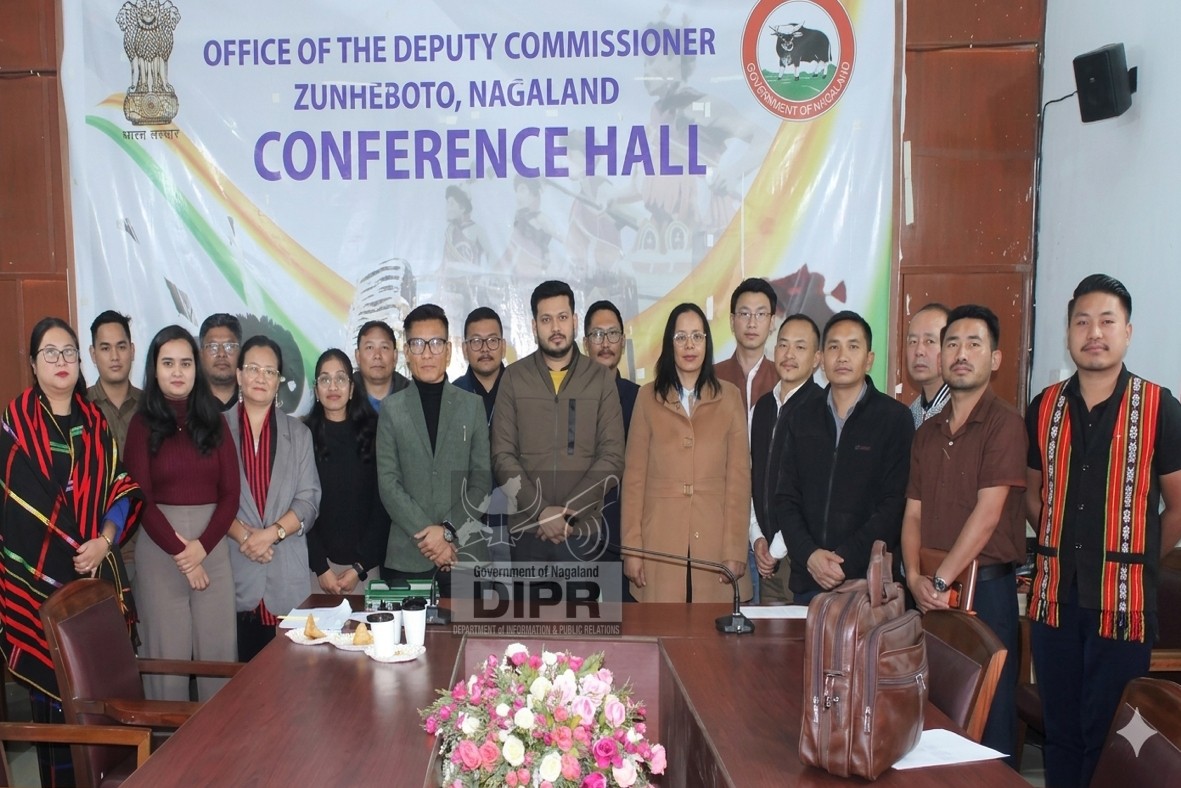
A high-level, one-day district stakeholder consultation workshop on Viksit Nagaland 2047 was convened at the Deputy Commissioner’s Conference Hall, Zunheboto on 16th April 2026. Organized under the aegis of the Department of Planning & Transformation, the workshop aimed to formulate a comprehensive roadmap for the state’s development over the next two decades.
The primary objective of the consultation was to capture inclusive, multi-sectoral perspectives to identify systemic gaps and define visionary development targets for the milestone years 2030, 2038, and 2047. The initiative seeks to transition Nagaland into a self-sufficient and sustainably developed state.
Delivering the welcome address, Deputy Commissioner of Zunheboto, Dharam Raj, IAS, provided a strategic overview of the Viksit Nagaland 2047 vision. He emphasized that an inclusive and participatory approach is non-negotiable for effective planning. "This session is designed to bridge the gap between grassroots challenges and policy formulation. While we acknowledge existing shortcomings in government infrastructure and policy gaps, our focus is on proposing actionable changes to the government," the DC stated.
The Deputy Commissioner appealed for deep introspection regarding self-sufficiency, advocating decentralization by empowering district-level administration with enhanced roles and powers.
The program also emphasised on Inclusive Budgeting; Prioritizing dedicated fiscal planning for persons with disabilities, women, and youth (under 25), besides External Intervention by Leveraging the expertise of NITI Aayog for structured growth.
The workshop was structured around five thematic State Working Group (SWG) pillars. District line departments presented key challenges and proposed forward-looking strategies under Economic, Social, Environmental, Infrastructure and Governance.
To ensure focused discourse, participants- including Heads of Departments, Civil Society Organizations (CSOs), representatives from educational institutions, and church leaders- were divided into specialized working groups. Technical guidance was provided via a PowerPoint presentation by the visiting NITI Aayog team, featuring sector experts Nyanthung Y. Humtsoe, Shweta J. Shinde, and Varsha Badikol.
The consultation featured a robust open house discussion moderated by EAC Zunheboto, L. Chinglem Konyak, where stakeholders debated local exigencies and long-term aspirations.
The program concluded with a vote of thanks delivered by DPO (Planning), David Sema, who also provided updates on the compilation of the comprehensive District Report, which will serve as a foundational document for the state’s 2047 master plan.
(DPRO & IA Zunheboto)


